
How many restrooms does a race in Carmel need?
Runner count and course layout drive the number, not a flat formula. A start corral with 500 people needs more toilets than that same field spread over 13 miles, because a marathon course clears people out fast while a starting line holds a crowd for 30 minutes before the gun. How many porta potties do I need walks through the math by headcount, but the short version: cluster units at the start and finish, then drop single units or pairs every 2 to 3 miles along the route. ADA Standards section 213.2 requires that at least 5 percent of any cluster be accessible, with a minimum of one unit, so a bank of ten at the starting line needs at least one accessible unit in that group. ADA accessible porta potty units meet that spec with a 60 inch turning circle per ADA Standards section 304.3.1 and a 32 inch clear door opening under section 404.2.3. For a race that draws runners from Westfield, 7.5 miles north, or Zionsville, 11.7 miles west, plan restroom clusters near parking and shuttle drop points, not just the finish line chute. Standard units run between $130 and $500 for a week rental depending on count and service level, and event pricing for a race-day standard unit typically falls between $200 and $800 depending on service frequency and cleanup needs.
Where should restrooms go along a race course?
Placement follows water stations and turn points, not the midpoint of a straight stretch. Runners need a restroom near every aid station, and race directors in Carmel typically stage units at the 5K, 10K, and half-marathon splits so nobody has to leave the course to find one. Porta potty placement guide covers ground clearance and slope, and it matters here: ADA Standards section 302.1 requires a stable, firm, slip resistant surface, which rules out soft turf or gravel that shifts underfoot. A standard unit runs about 44 by 48 inches on the ground and needs a same-size flat pad, so course marshals should scout placement the week before, not the morning of. If the race crosses through areas with generators or a temporary power pole for timing equipment and lighting, keep restroom clusters at least a few feet clear of cable runs and stake lines. Bracing a temporary power pole matters here too: how to brace a temporary power pole comes down to guy wires running away from the pole at an angle, anchored to stakes or ballast blocks, and never crossed by a runner's path or a restroom service truck's route. A light tower rental at a pre-dawn start line follows the same rule, needs stable footing and clearance from foot traffic. For races that start or finish near Noblesville, 12.6 miles northeast, or draw volunteers from Lawrence, 16.2 miles southeast, factor drive time into your delivery and pickup schedule so units are in place before packet pickup opens.
Do race restrooms need servicing during the event?
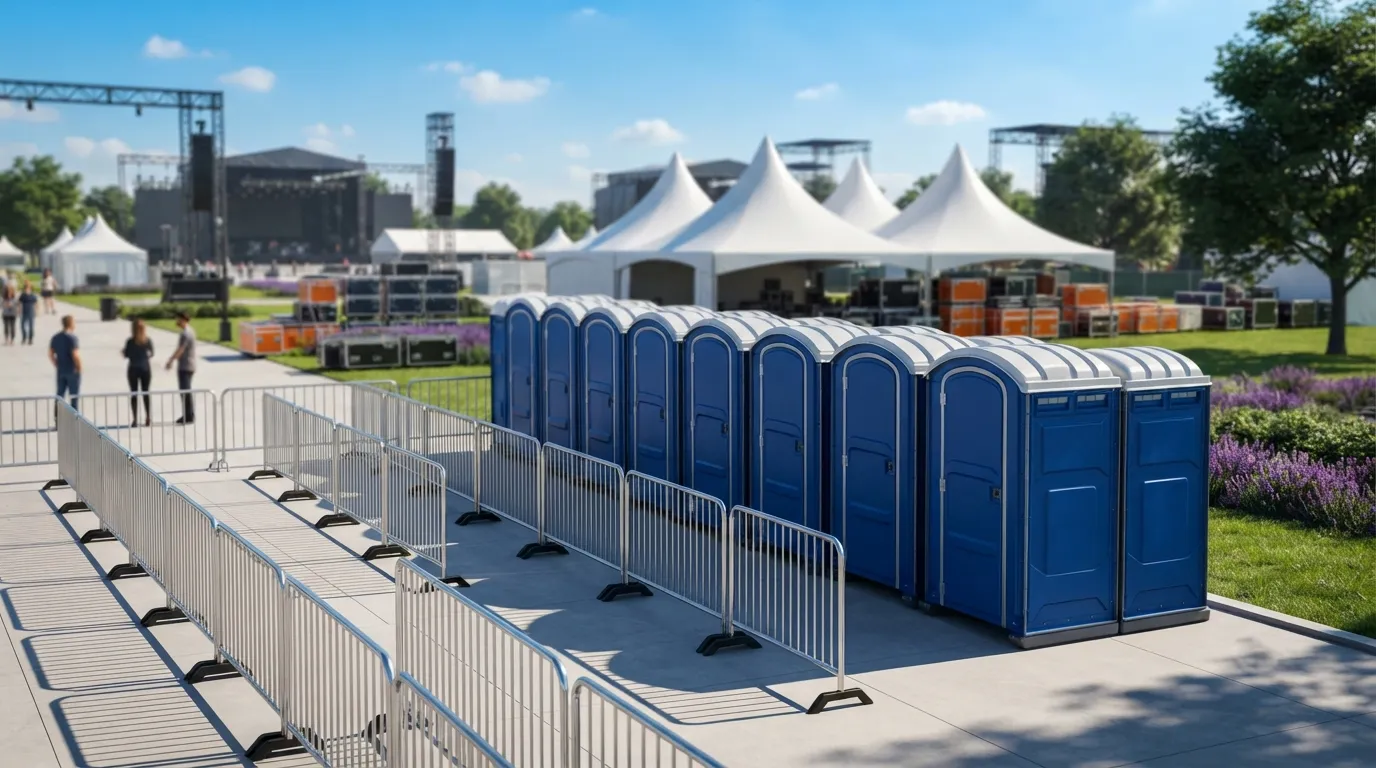
Yes, for anything over a few hours or a few thousand runners, mid-event servicing keeps units usable through the whole field, not just the first wave. ANSI/PSAI Z4.3 sets a baseline of one service visit per week for up to 10 users over a standard 40 hour week, but a race compresses that same usage into a single morning, so units at a starting corral need a pre-event service and a check partway through if the event runs long. How often are porta potties cleaned breaks down normal service intervals, but race day is different: high-traffic clusters at start and finish lines see more use in three hours than a construction site sees in a week. OSHA 1926.51(c) sets toilet ratios for job sites, not races, but it's a useful baseline for crew and vendor restrooms if your event also has a build crew setting up staging or fencing the day before. Temporary fence rental around restroom clusters keeps queues orderly and keeps non-runners out of the vendor area. If your race includes a beer garden or post-race festival, a restroom trailer rental or 4 stall restroom trailer handles the after-party crowd better than standard units alone, and an event restroom rental plan should cover both the race and any lingering crowd at the finish.
How far in advance should we book restrooms for a race?
Book 4 to 6 weeks out for anything over 500 runners, sooner for events landing on a busy fall weekend. Carmel race season overlaps with other cities' events, so units and drivers get booked early. Use request a quote to lock a date.
Can we get a mix of standard and ADA units for one race?
Yes. Most races order a bank of standard units at start and finish with one or two ADA units mixed in per ADA Standards section 213.2. See standard porta potty rental and ADA accessible porta potty for specs and setup.
What does a marathon restroom package cost?
Cost depends on unit count, service visits and event length. Standard units for event use typically run $200 to $800 each; see porta potty rental cost for the full breakdown by duration.
Do we need a permit to place restrooms on city streets?
Placement in the public right of way needs confirming with Carmel directly. Check porta potty permit requirements before finalizing your course map.
Can Carmel Porta Pros handle restrooms and fencing together?
Yes. Many races order temporary fence rental or crowd control barrier rental alongside restrooms for the same footprint, delivered and picked up on one schedule.
Next step
Get a delivery date
Tell us the address, the dates and the headcount. We size the order and confirm the route.