
What Does OSHA Require For Portable Toilets On A Construction Site?
The rule is 1926.51(c)(1): one toilet seat for 20 or fewer employees. Add a toilet seat and a urinal for every 40 workers once the crew climbs past 20, and at 200 or more workers the ratio eases to one seat and one urinal per 50. That is the whole formula. It does not care whether the site is a subdivision build in Carmel or a road crew working toward Westfield, 7.5 miles north. OSHA also requires potable water at the site under OSHA 1926.51(a)(1), which most crews cover with the same delivery that drops off standard porta potty rental units. Crews doing painting, coatings, herbicide or insecticide work trigger a separate rule, OSHA 1926.51(f)(1), which requires washing facilities for that contaminant exposure specifically. It is not a general handwashing mandate, so do not lean on it for a standard framing job. If you are still working out headcount against ratio, our how many porta potties do i need guide walks the math with real crew sizes, and construction site services covers the rest of what a site typically needs beyond toilets, including temporary fence rental and light tower rental.
Cal Osha Portable Toilet Requirements Construction: Does That Apply In Indiana?
No. Cal/OSHA is California's own enforcement program, and it runs stricter ratios than federal rule in some cases. Indiana operates under federal OSHA, so a Carmel contractor follows OSHA 1926.51(c)(1) exactly as written above, not the California variant. If your company also bids work in a Cal/OSHA state, do not assume the ratios travel with you. A crew that searched "portable toilet rental oshawa" while researching multi-state compliance is likely thinking of a different jurisdiction entirely, whether that is Oshawa, Ontario or a misspelling of Ohio. None of that changes what Carmel requires. Keep the federal ratio as your baseline and check porta potty permit requirements for anything Carmel adds on top of the OSHA floor, since placement in the public right of way still needs confirming with the city before delivery.
Are There OSHA Portable Toilet Distance Requirements?
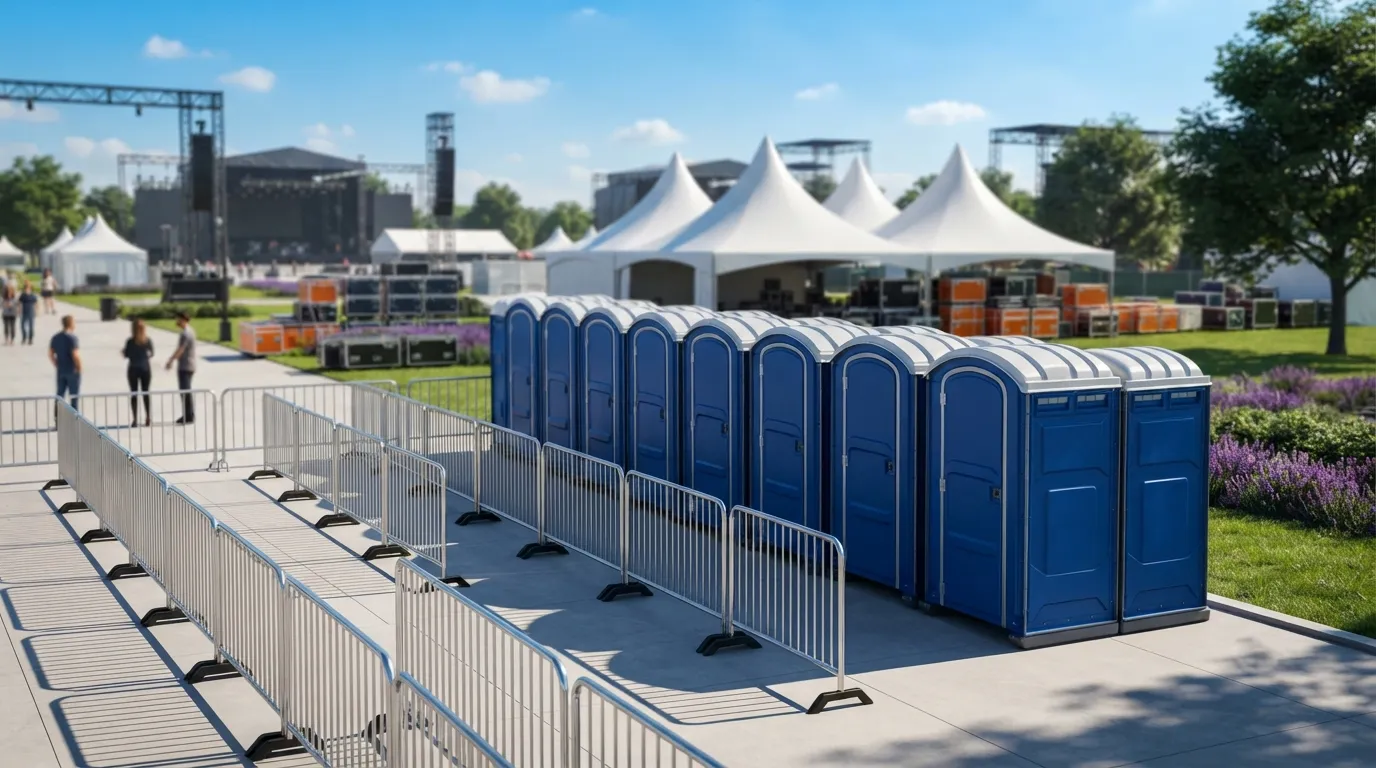
OSHA does not publish a maximum walking distance for construction toilets the way it does for agricultural field sanitation. Farm operations fall under a different rule, OSHA 1928.110, which sets a quarter-mile walk limit and one facility per 20 hand-labor employees. Construction sites do not get that same distance number in the general industry standard. Practically, most Carmel contractors still place units within a short walk of the active work zone, because crews that have to walk far tend not to walk at all. If a project needs accessible placement, ADA Standards section 213.2 requires at least 5 percent of clustered single-user units to be accessible, never fewer than one, and the accessible unit needs a 60 inch turning circle inside per ADA Standards section 304.3.1. Pair that with a stable, slip-resistant ground surface under ADA Standards section 302.1. For sites running past dark, OSHA 1926.56(a) sets minimum lighting levels worth checking alongside toilet placement.
How Many Porta Potties Do I Need For OSHA Compliance?
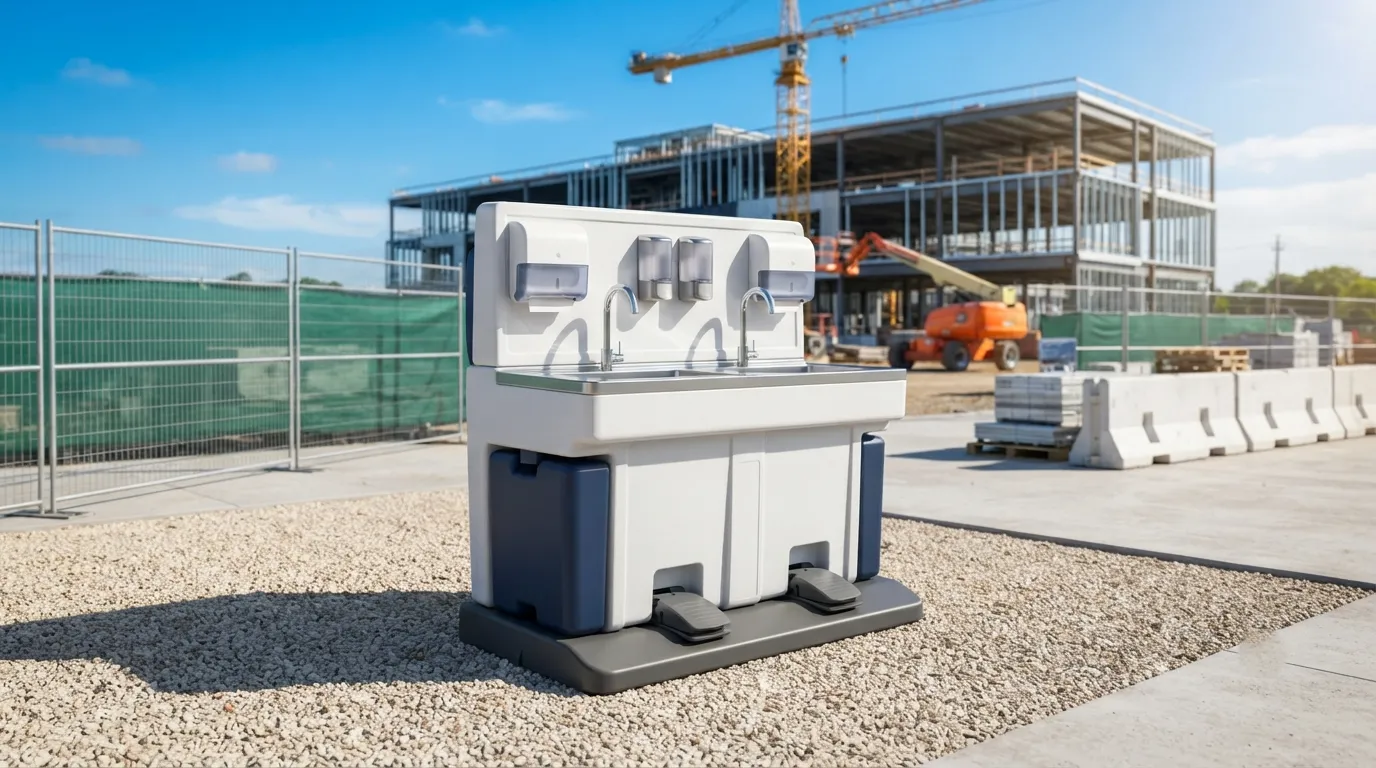
Start with the ratio, then round up. A 15-person framing crew in Carmel needs one unit under 1926.51(c)(1). A 45-person crew crosses into the next bracket and needs a toilet seat and a urinal for every 40 workers, so that crew needs two units minimum. A 200-person job site drops to one seat and one urinal per 50, which changes the math again at scale. ANSI/PSAI Z4.3 sets the baseline service interval at once a week for up to 10 users over a 40-hour week, so bigger crews or longer hours mean more frequent pumping, not just more units. Rental terms scale with the job: a standard porta potty rental runs a daily, weekly or monthly rate depending on project length, and our porta potty rental cost page breaks down what drives that number. Multi-week jobs often do better on a monthly porta potty rental than repeated day rates. If the crew needs handwashing beyond what a toilet unit includes, 29 CFR 1910.141(d)(2) requires soap and towels or a drying device, not hand sanitizer alone, which is why some Carmel sites add a standalone handwashing station rental or portable sink rental next to the toilets.
| duration | low | typical | high |
|---|---|---|---|
| day | $100 | $150 | $350 |
| week | $130 | $200 | $500 |
| month | $125 | $200 | $325 |
Does a small residential job still need OSHA-compliant toilets?
Yes, if anyone is employed on site, even a single subcontractor. A homeowner working alone is not covered the same way, but a hired crew triggers 1926.51(c)(1) regardless of job size. Many Carmel remodels bring in a home renovation porta potty for exactly this reason.
Do event rentals need to follow the same OSHA ratio?
No. OSHA governs employers and employees, not public events. Event headcount planning follows attendance-based guidance instead, which is why event restroom rental and wedding restroom rental use different ratios than a job site.
What is the difference between OSHA 1926.51(c) and 1910.141?
1926.51(c)(1) governs construction sites. 1910.141(c)(1)(i) governs general industry workplaces like warehouses or shops. They use different employee-count tables, so check which one applies to your worksite type first.
Can one ADA unit cover a whole Carmel job site?
Sometimes. ADA Standards section 213.2 requires 5 percent of clustered units be accessible, never fewer than one. A site with four or fewer standard units still needs one accessible unit under that rule.
How far is Carmel from other cities needing the same OSHA rule?
The same federal ratio applies everywhere in the region. Zionsville sits 11.7 miles west, Noblesville 12.6 miles northeast, and Whitestown 16.5 miles west, all under identical 1926.51(c)(1) requirements as Carmel job sites.
Next step
Get a delivery date
Tell us the address, the dates and the headcount. We size the order and confirm the route.